Introduction
Packing for a trip can quickly become complicated when clothes, accessories, and personal belongings all compete for limited suitcase space. A suitcase may look organized when it is first packed, but after a few days of traveling, finding a particular shirt or pair of trousers can become difficult. Clothes shift during transportation, clean and worn items can become mixed together, and unpacking may take longer than expected.
Packing cubes offer a simple way to divide luggage into smaller, more manageable sections. Instead of placing everything directly into a suitcase, travelers can organize clothing and accessories into separate fabric compartments. Compression packing cubes take this idea further by incorporating a compression system intended to reduce the space occupied by packed items.
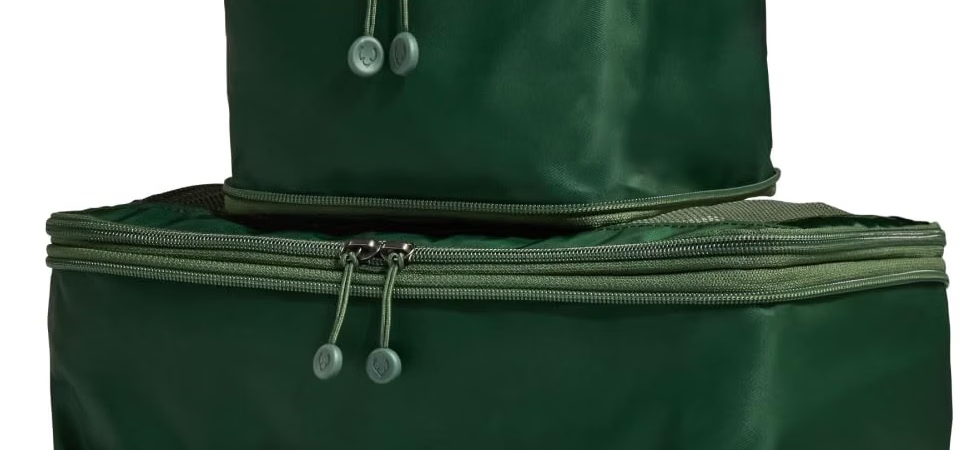
The Antler Compression Packing Cubes for Travel, Set of 4, Green are designed for travelers who want a more structured approach to packing. The four-piece configuration provides several separate organizers, while the compression format is intended to help manage clothing volume inside luggage. The green color also gives the set a recognizable appearance.
Although packing cubes can make luggage organization more convenient, they do not increase the physical capacity of a suitcase. Compression works by reducing excess air and compacting suitable clothing, and the final result depends on fabric type, garment thickness, folding technique, and how much pressure is applied.
This guide explores the Antler compression packing cube set, its practical features, different ways to use it, and the important details to consider before choosing compression organizers for travel.
Key Features of Antler Compression Packing Cubes
The Antler set combines a four-piece packing arrangement with a compression-oriented design. Understanding the characteristics of this type of luggage organizer can help travelers decide how it might fit into their packing routine.
Exact dimensions, materials, closure systems, compression mechanisms, and care instructions should be confirmed through the current Amazon listing or official Antler product information.
1. Four-Piece Packing Cube Set
The product is presented as a set of four packing cubes.
Having multiple organizers allows travelers to divide belongings into separate categories instead of placing everything inside one large compartment.
For example, the cubes could be arranged around clothing types:
- Tops and T-shirts.
- Trousers and shorts.
- Underwear and socks.
- Sleepwear or lightweight clothing.
Another approach is to organize items according to when they will be used. Clothing for the first few days of a trip could be kept separate from items intended for later in the journey.
This type of organization can make it easier to locate belongings without unpacking the entire suitcase.
The four-piece format also provides flexibility. Travelers can use all four cubes for one trip, or select only the sizes that fit a smaller bag.
However, the actual dimensions of each cube matter. Before choosing the set, check the product listing to understand how the four pieces differ in size and whether they accommodate the garments you normally pack.
2. Compression-Oriented Design
The main distinction between ordinary packing cubes and compression packing cubes is the additional compression system.
Traditional packing cubes primarily divide luggage into separate compartments. Compression cubes are intended to reduce the volume of suitable packed clothing by tightening the contents within the organizer.
The general process involves placing garments inside the cube and using the designated compression closure or system to reduce unused space.
This can be particularly relevant for soft clothing that contains pockets of air when loosely packed.
However, compression has limits.
It does not make clothing disappear or reduce its actual weight. Thick garments may remain bulky even after compression, and delicate fabrics may require more careful handling.
The amount of space saved also depends on how the garments are folded and arranged.
Travelers should avoid forcing the compression mechanism if the cube is overfilled. Doing so may place unnecessary strain on zippers, seams, or fabric.
3. Separate Storage for Different Clothing Categories
One advantage of a multi-cube set is the ability to create a simple organization system.
Instead of searching through a suitcase for a particular item, travelers can identify which cube contains the relevant category of clothing.
For example, a family traveler might dedicate separate cubes to different family members. Someone traveling alone could use one cube for casual clothing, another for formal outfits, and another for smaller garments.
The arrangement can also be adjusted according to the length of the journey.
For a short weekend trip, two cubes may be enough. For a longer holiday, all four may be useful.
This flexibility makes packing cubes relevant to different travel styles.
4. Green Color
The green color gives the Antler set a distinctive appearance.
Although color does not change how compression works, it can make organizers easier to recognize inside a suitcase.
This may be useful when several bags or packing accessories are being used together.
Some travelers prefer neutral organizers that blend into their luggage, while others choose more noticeable colors to distinguish their belongings.
Green provides a visual alternative to conventional black or gray packing accessories.
Color preference is subjective, so buyers should review the current product photographs to understand the specific shade and appearance.
5. Improved Luggage Organization
Packing cubes are primarily organizational accessories.
They create smaller sections within a suitcase, making it easier to separate different types of belongings.
A traveler might use the four cubes to organize:
- Everyday clothing.
- Formal clothing.
- Sleepwear.
- Undergarments.
- Workout clothing.
- Accessories.
This can be especially helpful when moving between several destinations.
Instead of unpacking everything at every hotel, travelers can remove the cube they need and keep the remaining organizers inside the suitcase.
This approach can reduce the amount of time spent searching through luggage.
6. Potentially Useful for Different Luggage Types
Packing cubes are commonly used inside suitcases, but they can also work with other travel bags when the dimensions are suitable.
Possible luggage types include:
- Cabin suitcases.
- Checked suitcases.
- Travel backpacks.
- Weekender bags.
- Larger duffel bags.
The key is to compare the dimensions of the cubes with the available interior space.
A compression cube that is too wide or tall for a particular bag may not fit efficiently, even if its individual storage capacity is suitable.
Travelers should also consider the shape of their luggage. Hard-shell suitcases often have defined interior sections, while soft-sided bags may offer more flexible space.
7. Reusable Travel Organization
Packing cubes can be used repeatedly across different trips.
Rather than organizing every suitcase from the beginning, travelers can develop a familiar system in which each cube has a specific purpose.
For example, one cube might always be reserved for smaller clothing items, while another is used for casual wear.
This consistency can make preparation easier, particularly for people who travel frequently.
The lifespan of the organizers depends on their construction, frequency of use, loading habits, and care.
Regular inspection of zippers, seams, and compression closures can help identify wear before the next trip.
8. Antler Travel Accessories
Antler is a luggage and travel accessories brand.
When considering accessories from a recognizable luggage brand, it is still important to assess the specific product rather than assuming that all items share the same construction or performance characteristics.
For the Compression Packing Cubes, buyers should focus on the set configuration, dimensions, material, compression system, and care instructions.
The current product listing and official manufacturer information are the appropriate sources for confirming exact specifications.
How Antler Compression Packing Cubes Can Be Used
Compression packing cubes can support several travel routines. Their practical value depends on how travelers divide their belongings and what type of clothing they intend to pack.
1. Organizing Clothes for a Weekend Trip
A short trip often requires a limited selection of clothing, but even a small suitcase can become disorganized when items are packed without a clear structure.
The four-piece set can be divided into categories such as:
Cube one: Everyday clothing
T-shirts, tops, and casual garments.
Cube two: Bottoms
Trousers, shorts, skirts, or other clothing items.
Cube three: Smaller essentials
Underwear, socks, and lightweight accessories.
Cube four: Sleepwear and additional clothing
Items intended for evenings or backup outfits.
This arrangement helps keep the suitcase organized while making it easier to find particular items.
For shorter journeys, travelers do not necessarily need to fill every cube. Using only the pieces required can help avoid unnecessary luggage bulk.
2. Packing for Longer Holidays
Longer trips generally involve more clothing and a greater need for organization.
A traveler moving between hotels or destinations may not want to unpack the entire suitcase at each stop.
Packing cubes can make this process more manageable by keeping clothing grouped according to use.
For example, one cube could contain clothing for warmer days, while another holds items intended for cooler conditions.
The compression feature may help reduce the volume of suitable garments, although the total amount of luggage space required still depends on the clothing itself.
It is also useful to leave some room for items purchased during the trip.
3. Organizing a Carry-On Suitcase
Travelers who prefer cabin luggage often need to manage space carefully.
A small suitcase can become crowded when clothing, toiletries, electronics, and other essentials are packed together.
Compression packing cubes may help organize clothing into smaller sections.
Before using them in cabin luggage, compare the combined dimensions of the packed cubes with the suitcase’s interior.
Also remember that compression can change the shape of a packed cube. A cube that appears compact when empty may become more rigid or uneven after being filled.
A practical approach is to test the arrangement at home before departure.
4. Separating Clothing for Different Activities
Some trips involve several types of activities.
A traveler might need casual clothes for sightseeing, formal clothing for an event, and sportswear for exercise.
Using separate packing cubes can make these categories easier to manage.
For example:
- One cube for everyday outfits.
- One cube for formal clothing.
- One cube for sportswear.
- One cube for sleepwear and smaller essentials.
This approach can also reduce the need to move clothing around when preparing for a particular activity.
5. Family Travel Organization
Packing cubes can be useful when several people share a large suitcase or when each family member has separate luggage.
The four-piece configuration may help divide belongings into manageable groups.
For example, parents could assign cubes to different family members or separate children’s clothing by category.
However, four cubes may not be sufficient for an entire family, depending on the length of the trip and the amount of clothing required.
It is important to plan the arrangement before packing rather than assuming that every item will fit.
6. Keeping Clean and Worn Clothing Separate
After several days of travel, clean and worn clothing can become mixed together.
Packing cubes can help create separate storage areas.
For example, one cube may be reserved for clean clothing while another is used for items that have already been worn.
If clothing is damp or particularly dirty, it should be stored separately in a suitable laundry or waterproof bag rather than placed directly against clean garments.
Packing cubes are organizers, not necessarily laundry bags. Their ability to contain moisture or odors depends on the material and construction.
7. Organizing Clothing for Business Trips
Business travel often requires a combination of professional and casual clothing.
Packing cubes can help separate work outfits from other belongings.
A traveler might organize shirts and trousers separately from casual clothes and smaller essentials.
However, compression should be used carefully with garments that wrinkle easily.
Business clothing may require folding techniques designed to reduce creasing, and some garments may be better carried in a dedicated garment bag.
The aim is to balance organization with appropriate garment care.
8. Using Packing Cubes for Backpack Travel
Travel backpacks often have a different interior structure from traditional suitcases.
Their shape may make it difficult to organize clothing in a way that allows easy access.
Packing cubes can create more predictable sections within the backpack.
The four-piece set may be useful if the individual cubes fit the backpack’s dimensions.
Before packing, check the backpack’s internal measurements and consider how the cubes will be positioned.
Avoid overfilling them, as overly compressed organizers may become difficult to fit through narrow openings.
9. Preparing for Seasonal Travel
Trips during colder months often involve bulkier clothing.
Sweaters, thermal layers, and heavier garments can occupy considerable suitcase space.
Compression cubes may help manage suitable soft clothing, but thick winter items still require substantial room.
For warm-weather travel, lighter clothing may compress more easily.
A practical approach is to plan outfits around the expected weather and avoid packing unnecessary items simply because compression organizers are available.
Who May Find the Antler Compression Packing Cubes Suitable?
The Antler set may be relevant to several types of travelers, depending on their packing habits and luggage requirements.
1. Frequent Travelers
People who travel regularly often develop a preferred packing system.
Compression packing cubes can help make that system more consistent by providing separate spaces for different clothing categories.
The four-piece configuration may be useful for travelers who want several organizers without assembling a collection of unrelated bags.
2. People Who Prefer Organized Suitcases
Some travelers prefer to know exactly where each category of clothing is stored.
Packing cubes can help create this structure.
Instead of searching through a suitcase, they can identify the relevant cube and remove it when needed.
This may be particularly useful during trips involving multiple hotels or frequent changes of accommodation.
3. Carry-On Luggage Users
Travelers who prefer smaller suitcases may be interested in compression packing cubes because they are designed to reduce the volume occupied by suitable clothing.
However, compression does not guarantee that all belongings will fit into cabin luggage.
The dimensions of the suitcase, airline restrictions, and the total weight of the packed bag remain important.
4. Backpack Travelers
People who use travel backpacks may appreciate separate organizers that make clothing easier to access.
Packing cubes can also help prevent smaller items from becoming mixed with larger belongings.
The cubes should be selected according to the backpack’s internal dimensions.
5. Families and Couples
The four-piece configuration can provide a straightforward way to divide clothing among different people or categories.
For couples sharing luggage, separate cubes can help keep belongings distinct.
Families may need additional organizers depending on the number of travelers and the length of the journey.
6. Business Travelers
People who travel for work may use packing cubes to separate professional clothing from casual garments and personal essentials.
They should consider the type of clothing being packed, particularly when wrinkle-sensitive garments are involved.
Compression is generally more appropriate for suitable soft clothing than for structured or delicate pieces.
7. People Who Like Reusable Travel Accessories
Packing cubes can be used across multiple trips.
Travelers who prefer to maintain a consistent luggage organization system may find a reusable four-piece set relevant to their routine.
Regular inspection and appropriate care can help maintain the organizers’ condition over time.
Important Things to Consider Before Choosing Compression Packing Cubes
Compression packing cubes can make luggage more organized, but their effectiveness depends on several practical factors.
1. Check the Dimensions of All Four Cubes
A set of four does not automatically mean that all pieces will fit every suitcase.
Before choosing the Antler set, check the dimensions of each cube individually.
Consider:
- Length.
- Width.
- Height.
- Available interior volume.
- Shape after compression.
Compare these measurements with the inside of your suitcase or backpack.
This is especially important for cabin luggage, where space is limited.
2. Understand How Compression Works
Compression cubes reduce the space occupied by suitable clothing by removing excess air and compacting the contents.
They do not reduce the actual weight of the garments.
This distinction matters because travelers sometimes assume that compressed luggage will also be lighter.
A suitcase containing the same clothing still weighs approximately the same after compression.
Airline weight restrictions therefore remain relevant.
3. Avoid Overpacking
It can be tempting to fill every cube as much as possible.
However, overpacking may make compression difficult and place unnecessary strain on the closure system.
A cube should be filled within its intended capacity.
If the compression zipper becomes difficult to operate, forcing it may damage the zipper or seams.
4. Consider Fabric Type
Not all clothing compresses equally.
Soft garments such as T-shirts, casual tops, and lightweight trousers may be easier to compact.
Thick sweaters, structured jackets, and clothing with rigid components may retain much of their original bulk.
Delicate fabrics may also require careful folding to reduce creasing or damage.
The amount of space saved will therefore vary depending on the contents.
5. Pay Attention to Wrinkles
Compression can increase pressure on clothing.
Some garments may emerge with more wrinkles than they would have after traditional folding.
This is particularly relevant for:
- Formal shirts.
- Linen clothing.
- Structured trousers.
- Delicate fabrics.
- Business outfits.
For garments that need to remain presentable, use suitable folding techniques and avoid excessive compression.
A garment bag may be more appropriate for certain formal clothing.
6. Check Zipper and Seam Quality
Compression organizers depend on their closures to contain packed clothing.
The zippers and seams may experience more stress than those on ordinary storage pouches because the compression process applies additional tension.
Inspect the organizers before and after trips.
If a zipper becomes damaged or a seam begins to separate, avoid forcing the cube closed.
7. Understand That Compression Does Not Increase Suitcase Capacity
This is one of the most important points.
Compression packing cubes can help reduce the volume of certain garments, but they do not make a suitcase physically larger.
They also occupy some space themselves because of their fabric and construction.
The practical result depends on how much unused air is removed and how efficiently the packed cubes fit together.
Travelers should test the complete arrangement before relying on it for a trip.
8. Consider Luggage Weight Restrictions
Although compression can reduce bulk, it does not reduce the weight of the clothing.
A suitcase may become easier to organize while still exceeding an airline’s weight allowance.
Check the relevant airline rules before departure.
This is particularly important when carrying heavier clothing, footwear, electronics, and other travel essentials.
9. Review Material and Cleaning Instructions
Packing cubes can collect dust, lint, and other debris from clothing and luggage interiors.
Cleaning requirements depend on the fabric and construction.
Check the manufacturer’s care guidance before washing or using cleaning products.
Avoid assuming that every packing cube is machine washable.
Allow organizers to dry properly if they become damp before storing them.
10. Check the Green Color and Product Appearance
The green color may appeal to travelers who prefer a recognizable set of accessories.
It can also help distinguish the cubes from other luggage organizers.
However, the exact shade may look different depending on lighting and display settings.
Review the current product images to understand the color and appearance.
11. Plan for Items That Should Not Be Compressed
Not every travel item belongs in a compression cube.
Fragile belongings, shoes with dirty soles, toiletries, electronics, and delicate accessories may require separate storage.
Use packing cubes primarily for suitable clothing and textiles.
Keep liquids in appropriate toiletry bags and protect fragile items with suitable padding.
Comparison of General Types of Travel Packing Organizers
Packing accessories come in several categories. Each has a different purpose, and understanding those differences can help travelers select the right organization system.
| Organizer category | Main purpose | Important considerations |
|---|---|---|
| Standard packing cubes | Separating clothing and accessories | Organization, dimensions, and material |
| Compression packing cubes | Reducing the volume of suitable clothing | Compression mechanism, fabric type, and zipper strength |
| Shoe bags | Separating footwear from other belongings | Size, ventilation, and cleaning |
| Laundry bags | Storing worn clothing separately | Breathability and moisture management |
| Toiletry bags | Organizing personal care products | Leak resistance, compartments, and cleaning |
| Garment bags | Protecting formal or structured clothing | Length, folding, and wrinkle management |
| Packing folders | Organizing clothing while controlling folds | Garment compatibility and available space |
Standard Packing Cubes
Standard packing cubes divide a suitcase into separate storage areas.
They are useful for keeping clothing categories together and making items easier to locate.
Unlike compression versions, they may not include a dedicated system for reducing packed volume.
They can be suitable for travelers whose main priority is organization rather than maximizing available space.
Compression Packing Cubes
Compression packing cubes combine organization with a mechanism intended to compact suitable clothing.
The Antler four-piece set belongs to this category.
They may be relevant to travelers who want to manage soft clothing more efficiently inside luggage.
The main considerations are the compression design, available dimensions, fabric type, and closure durability.
Shoe Bags
Shoe bags provide a separate place for footwear.
They can help prevent dirty soles from contacting clean clothing.
Some travelers use them alongside packing cubes to create a more complete luggage organization system.
Laundry Bags
Laundry bags are designed to separate worn clothing from clean items.
Depending on the construction, they may provide breathable storage or a more contained compartment.
They are useful on longer trips when clean and used garments need to remain separate.
Toiletry Bags
Toiletry bags organize personal care products such as shampoo, skincare items, and grooming essentials.
They should be selected according to the type of products being carried and any moisture-resistance requirements.
They serve a different purpose from clothing compression cubes.
Garment Bags
Garment bags are intended for clothing that benefits from hanging or more structured storage.
They may be particularly relevant to formalwear, suits, dresses, and other garments that wrinkle easily.
They generally require a different luggage arrangement from ordinary packing cubes.
Packing Folders
Packing folders are designed to help organize folded garments.
Some travelers use them for shirts and other clothing that benefits from controlled folding.
They may be useful when maintaining garment presentation is more important than compressing volume.
Frequently Asked Questions
1. What are Antler Compression Packing Cubes?
They are travel organizers designed to separate clothing and help manage the space occupied by packed garments.
The product is listed as a four-piece set in green.
The current Amazon listing should be checked for exact dimensions, material information, and compression details.
2. How many pieces are included?
The product title identifies the set as containing four packing cubes.
Check the current listing for the dimensions and configuration of each individual piece.
3. What is the purpose of compression packing cubes?
Compression packing cubes are designed to reduce the volume occupied by suitable clothing.
They typically use an additional closure or compression system to compact packed garments.
The amount of space saved depends on the type of clothing and how it is packed.
4. Do compression cubes reduce luggage weight?
No. They can reduce the volume occupied by clothing, but they do not reduce the actual weight of the items.
Airline weight restrictions still apply.
5. Are these cubes suitable for carry-on luggage?
They may be suitable for carry-on luggage if their dimensions fit the suitcase.
However, travelers should check the internal measurements of their bag and the airline’s cabin baggage requirements.
The complete packed suitcase must still meet applicable size and weight limits.
6. Can they be used in a travel backpack?
Packing cubes can be useful in backpacks when their dimensions match the available interior space.
The shape and opening of the backpack should be considered before selecting the cubes.
7. What types of clothing are suitable for compression?
Soft clothing such as T-shirts, casual tops, lightweight trousers, and selected everyday garments may be suitable.
Thick or structured clothing may not compress as efficiently.
Delicate garments should be packed carefully to avoid excessive wrinkling.
8. Can compression packing cubes cause wrinkles?
They can, depending on the clothing and how tightly it is packed.
Garments that wrinkle easily should be folded carefully and not compressed excessively.
For formal clothing, a garment bag or another suitable packing method may be preferable.
9. Are the cubes suitable for separating clean and dirty clothes?
They can be assigned to separate clothing categories, but their suitability for storing worn garments depends on their material and construction.
Damp or heavily soiled clothing should be kept in an appropriate laundry bag rather than placed directly against clean garments.
10. Can the cubes be used for family travel?
Yes, packing cubes can help divide belongings among family members or clothing categories.
The four-piece set may provide a starting point, although larger families may need additional organizers.
11. How should packing cubes be cleaned?
Follow the manufacturer’s care instructions.
Cleaning requirements depend on the material and construction.
Do not assume that the cubes are machine washable unless the manufacturer confirms this.
12. Does the green color affect functionality?
No. The color is primarily an appearance feature.
However, a recognizable color can make the organizers easier to identify inside a suitcase.
13. Do packing cubes replace a suitcase organizer?
Packing cubes are themselves a type of luggage organizer.
They can be used with other accessories, such as shoe bags, toiletry bags, and laundry pouches, to create a more structured packing arrangement.
14. What should buyers check before ordering?
Important details include:
- Dimensions of all four cubes.
- Material composition.
- Compression system.
- Zipper and seam construction.
- Cleaning instructions.
- Compatibility with the intended suitcase.
- Available color options.
These details help determine whether the set matches a particular travel routine.
Conclusion
Packing cubes can make travel preparation more organized by dividing clothing into manageable categories and reducing the need to search through an entire suitcase for individual items.
The Antler Compression Packing Cubes for Travel, Set of 4, Green combine a four-piece organization system with a compression-oriented design intended to help manage the volume of suitable clothing. This format may be relevant to frequent travelers, backpack users, families, and people who prefer a structured approach to packing.
The compression feature is an important consideration, but its practical results depend on the type of clothing, folding technique, available suitcase space, and how the organizers are used. Compression does not reduce the weight of luggage or guarantee that every item will fit into a smaller bag.
Before choosing the set, review the dimensions of each cube, confirm the construction and care requirements, and consider whether the compression system is appropriate for the garments you normally travel with.
When used thoughtfully, a four-piece packing cube set can become a reusable part of a travel organization routine. The key is to pack within the intended capacity, protect delicate clothing, and choose an arrangement that makes belongings easy to access throughout the journey.
You can check more details on Amazon here:
As an Amazon Associate, we earn from qualifying purchases.